

The Invisible Home: Solar Glass and Smart Curtains

The Paradigm Shift in Urban Energy
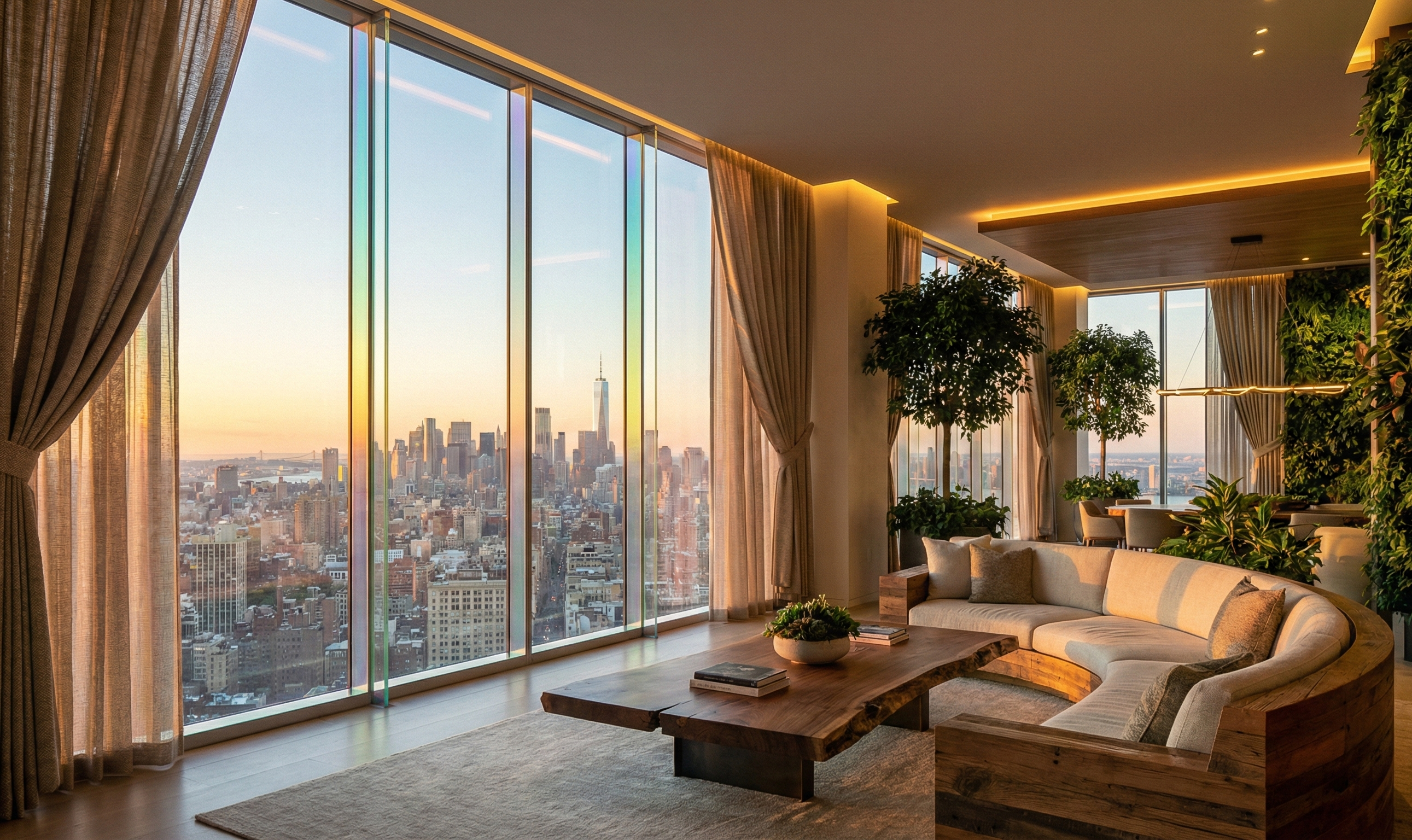
The architectural and energy landscapes of the United States and Europe are currently navigating a profound convergence. For decades, the visual language of renewable energy was defined by the "blue brick"—the heavy, opaque, polycrystalline silicon panel bolted onto rooftops, functionally additive but aesthetically disruptive. As the calendar turns to 2026, this paradigm is being dismantled by a new philosophy of design and generation: the "Invisible Home." This movement is characterized by Building-Integrated Photovoltaics (BIPV), a technological evolution where the energy generation capability is no longer a distinct feature attached to a structure but an intrinsic property of the building materials themselves.
The impetus for this shift is multifaceted. Rapid urbanization has concentrated populations in high-density vertical environments where roof space is mathematically insufficient to offset the energy consumption of the floors below. Simultaneously, regulatory frameworks such as the European Union’s REPowerEU and stringent new green building codes in US metropolitan centers are mandating net-zero targets that cannot be met through traditional conservation measures alone. The "Invisible Home" responds to these pressures by activating the building envelope—specifically windows and interiors—turning the passive glass skins of our cities into active power plants.
This report provides an exhaustive analysis of the two primary technologies driving this revolution in 2026: Transparent Solar Windows, the "holy grail" of urban energy that harvests invisible light; and Solar-Powered Interiors, specifically smart curtains and blinds that democratize energy generation for the rental market. By synthesizing advances in materials science—such as Quantum Dots (QDs) and Organic Photovoltaics (OPV)—with the practicalities of the real estate market, we reveal a future where energy infrastructure is indistinguishable from domestic design.
The Mechanics of Invisibility: Advanced Photovoltaic Technologies
To understand the commercial viability of the "Invisible Home" in 2026, one must first appreciate the complex physics that allows a window to remain transparent to the human eye while simultaneously capturing sufficient energy to be economically viable. The fundamental challenge has always been a contradiction in terms: photovoltaics traditionally work by absorbing light, while windows function by transmitting it. The breakthroughs commercialized by companies like Ubiquitous Energy and UbiQD in the mid-2020s rely on selective harvesting of the solar spectrum.
The solar spectrum consists of ultraviolet (UV) light, visible light, and infrared (IR) light. Standard silicon panels absorb across the visible spectrum, resulting in their dark appearance. The new class of transparent BIPV (Building-Integrated Photovoltaics) utilizes materials engineered to be "spectrally selective." They allow the visible photons (roughly 390 to 700 nanometers) to pass through unimpeded, preserving the function of the window, while vigorously absorbing the invisible wavelengths on either side of the visual band.
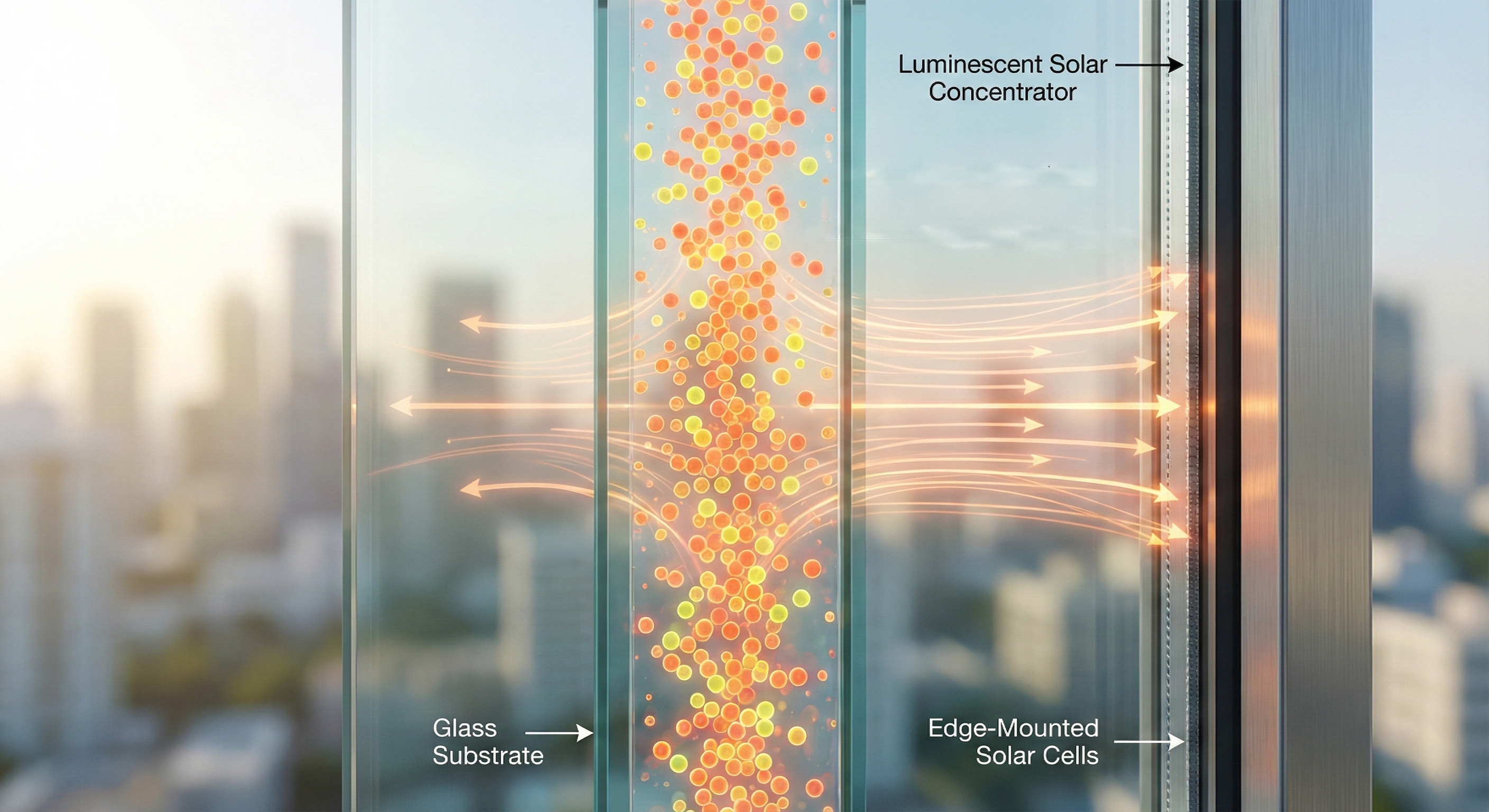
A leading approach in 2026 is the use of Quantum Dots (QDs), championed by companies like UbiQD with their "Wendow" product line. Quantum dots are nanoscale semiconductor particles—often composed of safe, non-toxic materials like copper indium sulfide and zinc sulfide (CuInS2/ZnS)—that exhibit unique optical properties determined by their physical size.
Crucially, this re-emitted light does not pass through the glass; instead, it is trapped within the glass pane by total internal reflection. The glass acts as a waveguide, directing the infrared photons to the thin edges of the window frame. Here, small strips of conventional, high-efficiency solar cells are concealed within the frame to capture the concentrated light and convert it into electricity. This architecture allows the main surface area of the window to remain highly transparent and color-neutral, a non-negotiable requirement for architectural glass.
A competing technological pathway is Organic Photovoltaics (OPV), utilized by Ubiquitous Energy (UE Power) and Next Energy Technologies. Unlike the quantum dot LSC approach, which concentrates light to the edges, UE Power often employs a coating of organic semiconducting dyes deposited directly onto the glass surface.
Beyond QDs and OPVs, 2026 is witnessing the emergence of perovskite-based transparent solar. Companies like Next Energy Technologies have begun demonstrating large-format transparent windows (up to 101.6 cm x 152.4 cm) using organic materials that border on perovskite structures. UbiQD has also expanded its portfolio by acquiring BlueDot Photonics to integrate perovskite materials, aiming to boost efficiency by harnessing high-energy photons more effectively. Perovskites offer the theoretical potential for higher efficiencies but have historically struggled with stability—a challenge that the 2026 generation of products claims to have largely mitigated through advanced encapsulation techniques.
| Feature | Quantum Dot LSC (UbiQD) | Organic PV (Ubiquitous Energy) | Traditional Silicon (Opaque) |
|---|---|---|---|
| Primary Mechanism | Light concentration to edges (Waveguide) | Direct thin-film absorption (Coating) | Direct wafer absorption |
| Transparency | High (Tinted/Neutral) | High (Color Neutral) | None (Opaque) |
| Efficiency (2026) | 3.6% - 5% | 5% - 10% (Theoretical max higher) | 18% - 24% |
| Aesthetics | Slight glow at edges; tint options | Invisible or slight blue/gray tint | Black/Blue brick aesthetic |
| Manufacturing | Laminated interlayer (Glass-to-Glass) | PVD Coating (Low-E line compatible) | Silicon wafer assembly |
| Key Advantage | Excellent light quality; agricultural crossover | Scalable via existing glass factories | Proven high yield & durability |
The Vertical Power Plant: Redefining Urban Architecture
The deployment of these technologies has given rise to the concept of the "Vertical Power Plant." In dense urban environments like New York, London, and Tokyo, the ratio of roof space to floor space is incredibly low. A 50-story residential tower may have a roof capable of hosting a 50kW array, which might power the elevators and lobby lights, but little else. However, that same building possesses acres of vertical glass façade.
Research indicates that in high-rise environments, the vertical surface area can exceed the rooftop area by a factor of 20 or more. By activating these surfaces with transparent solar technology, buildings can generate significant onsite power. Projections for 2026 suggest that widespread adoption of solar glazing in high-rise curtain walls could offset between 30% and 40% of a building's total energy consumption. This is a critical threshold for achieving "Net Zero Readiness" in urban centers where off-site renewable credits were previously the only option.
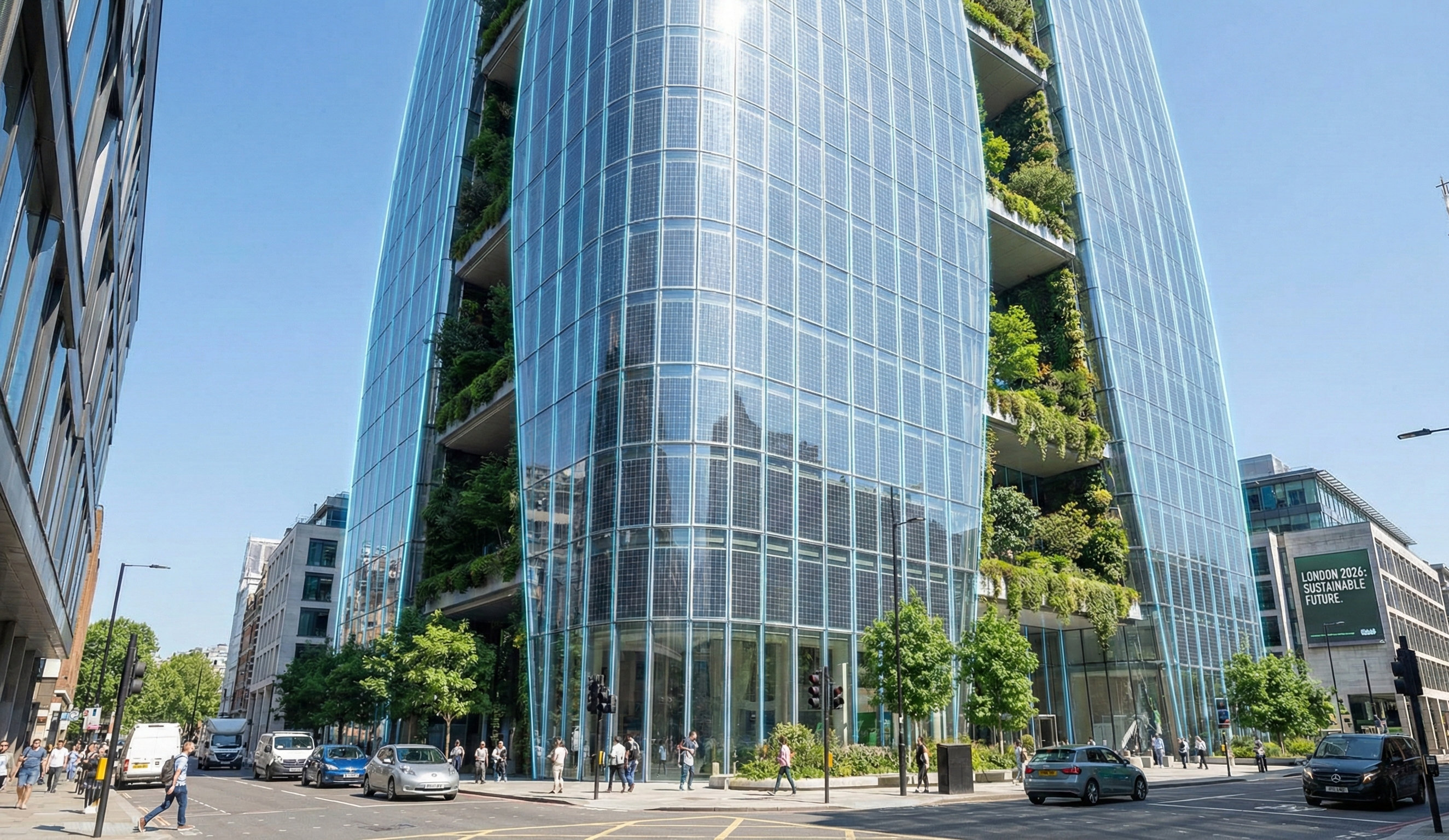
While an early adopter, the Heron Tower (Salesforce Tower) in London stands as a seminal example of the Vertical Power Plant concept. Its south façade is "veiled" with photovoltaic cells. Although utilizing an earlier generation of technology that is more visible than the 2026 "invisible" standard, it proved the viability of integrating power generation into the primary aesthetic element of a skyscraper. The PV array serves a dual purpose: generating power and acting as a solar shield to reduce thermal gain, a concept that modern transparent solar takes to its logical conclusion.
On a smaller but highly visible scale, the transparent solar bus shelter at Canary Wharf demonstrates the utility of BIPV in street furniture. Commissioned by the Canary Wharf Group and designed by Polysolar, this structure uses transparent photovoltaic glazing to generate approximately 2,000 kWh per year. The energy is used to power smart signage and lighting within the shelter. This project highlights the versatility of transparent solar—it is not limited to skyscrapers but can be integrated into the fabric of the streetscape, from bus stops to bike canopies.
In the United States, the National Renewable Energy Laboratory (NREL) has installed UbiQD's quantum dot windows in its cafeteria as a "living laboratory." This installation, active through 2025 and 2026, serves to validate the real-world performance of the technology. The windows provide power for LED lighting while maintaining a warm, neutral color profile that enhances the interior ambiance, proving that energy generation need not come at the cost of occupant comfort.
The driver for "aesthetic integration" is not purely artistic; it is regulatory. New green building codes in 2026, such as updated versions of New York's Local Law 97 and Europe's Energy Performance of Buildings Directive (EPBD), place strict limits on carbon emissions. Architects are faced with a dilemma: reduce window-to-wall ratios (making buildings darker and less desirable) or find a way to make the glass work harder. Transparent solar windows solve this dilemma. They allow architects to design glass-heavy structures that comply with strict energy codes because the glass itself is an active energy efficiency measure. The "solar heat gain coefficient" (SHGC) of these windows is naturally low because the IR light (heat) is being absorbed to create electricity rather than heating the room. This reduces the load on HVAC systems, providing a "double dividend" of energy generation and energy conservation.
Market Landscape: Manufacturers and Commercialization
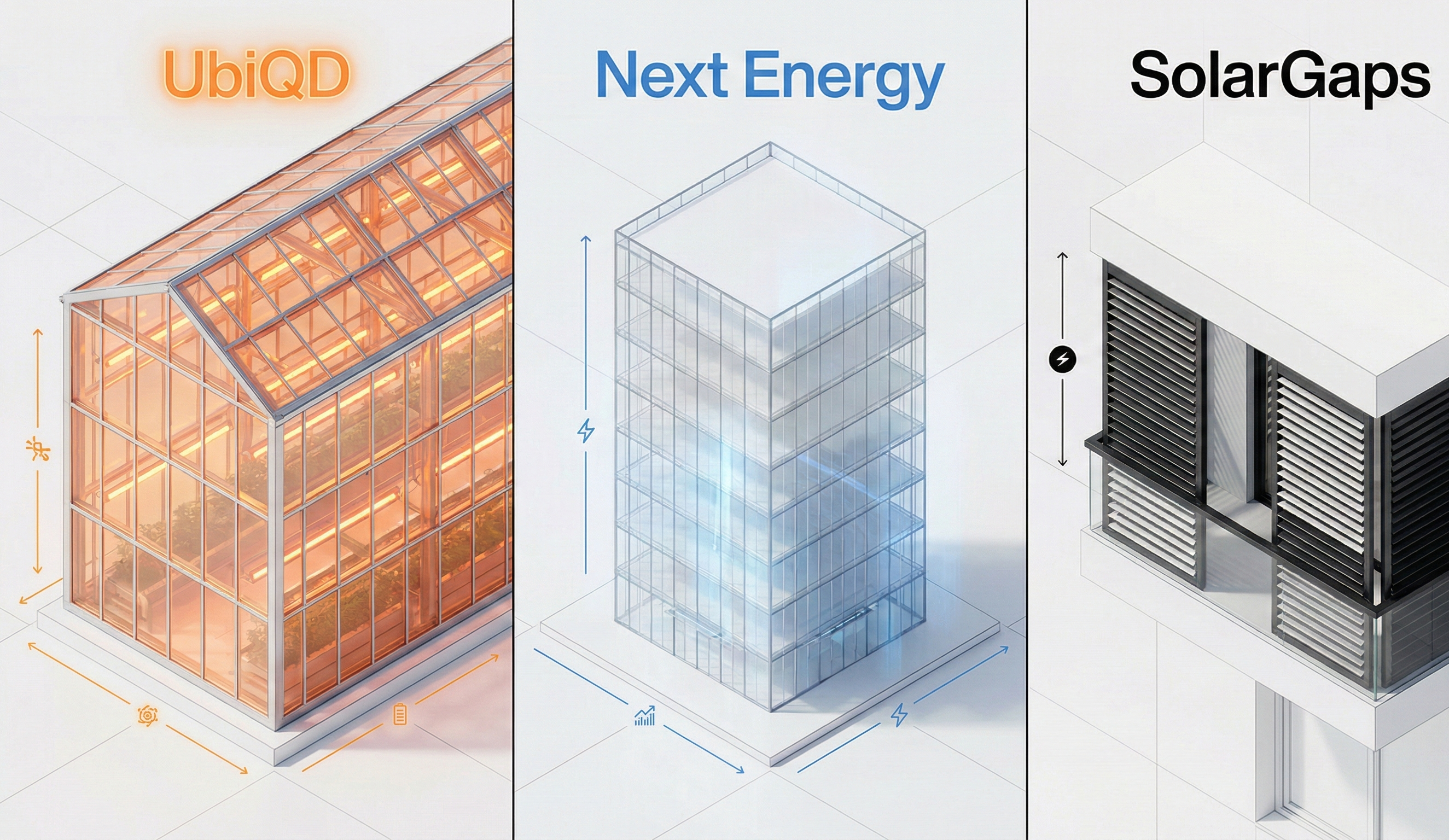
The BIPV market is transitioning from a niche curiosity to a multi-billion dollar industry, projected to reach over $32 billion by the end of 2026.
UbiQD's strategy is unique in its "cross-pollination" with agriculture. Their "UbiGro" product uses quantum dots to alter the light spectrum in greenhouses to boost crop yields. The revenue and data from this agricultural application have supported the development of their architectural "Wendow." In 2026, they are leveraging their Series B funding ($20M) to scale the manufacturing of their quantum dot interlayers, targeting both the retrofit market and new commercial construction.
Solar-Powered Interiors: The Renter's Revolution
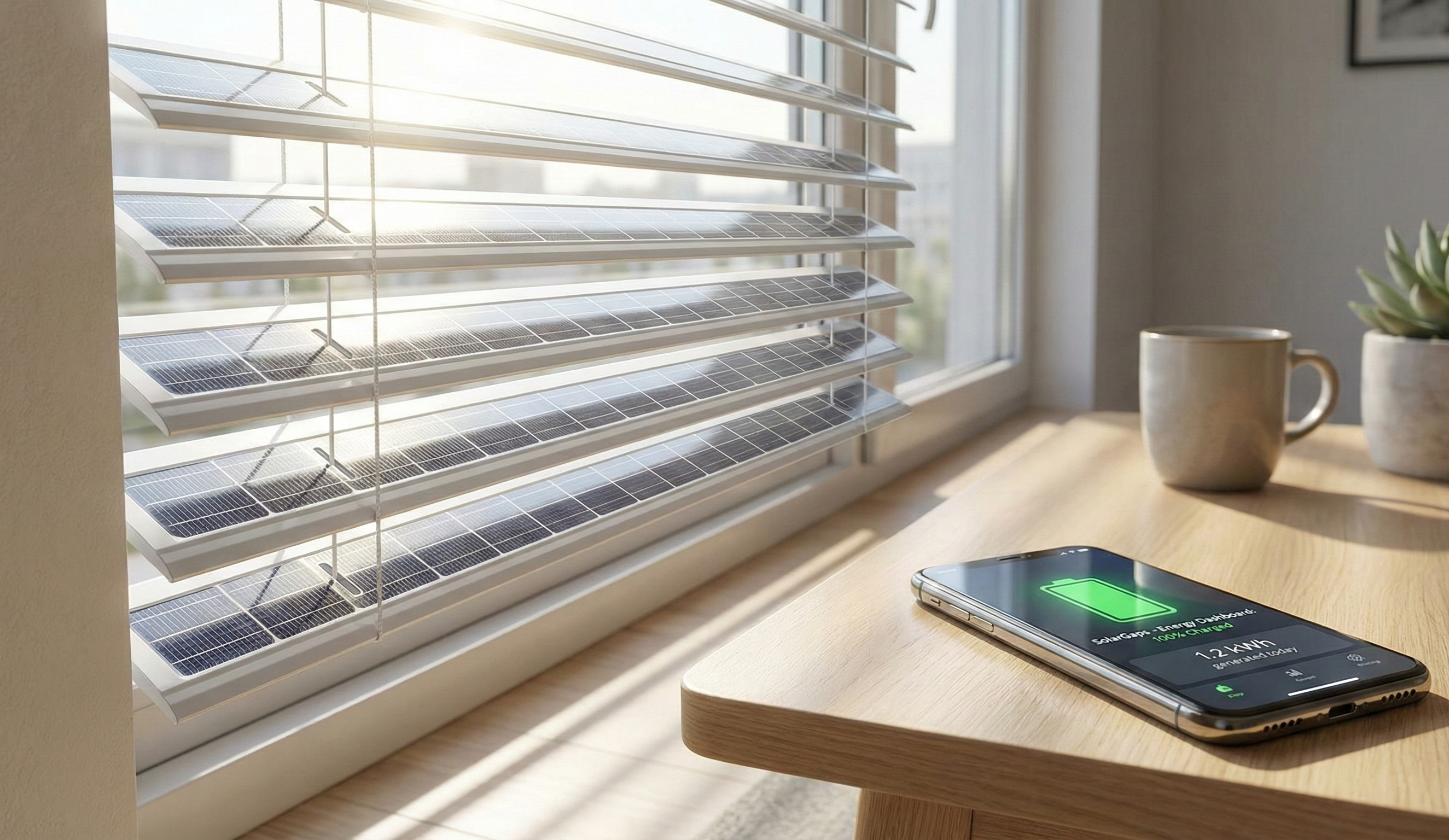
- Active Tracking: The defining feature of SolarGaps is its ability to track the sun. Unlike a static vertical window, the blinds automatically adjust the angle of the slats throughout the day to maintain optimal orientation toward the sun. This tracking can increase energy harvest significantly compared to fixed vertical panels.
- Power Output: A standard installation (approx. 10 sq ft / 1 sqm) is rated to generate up to 100 Watt-hours (Wh) per hour in peak conditions. For a south-facing apartment window, this can translate to ~1 kWh per day—sufficient to power a laptop, Wi-Fi router, and smart home devices, or to charge a portable battery station.
- Active Shading: Beyond generation, the blinds physically block solar heat from entering the room. Manufacturers claim this can reduce air conditioning costs by up to 30-80% depending on the climate.
- Product Diversity: Unlike the rigid slats of SolarGaps, Solar Curtain offers a range of form factors, including "Zebra" (striped) and "Blackout" models.
- Market Positioning: They market their product as a "smart curtain" suitable for homes, kindergartens, and offices. The company holds patents for their specific fold-and-retract mechanism that integrates flexible solar cells into the fabric-like structure of the curtain.
- Pricing: The units are premium products, with prices ranging from approximately $1,190 to over $8,000 for large, motorized systems. This price point positions them as a luxury retrofit rather than a mass-market commodity, though the energy savings and tax incentives (discussed below) help offset the cost.
- Autonomy: These systems are often self-powered, using the solar energy to charge an internal battery that operates the motor, eliminating the need for hardwiring into the building's electrical system. This makes them ideal for retrofits on modern facades where running new conduit is difficult.
The proliferation of plug-in solar devices like SolarGaps has necessitated updates to grid connection standards. In the UK and Europe, regulations often referred to as "G83-Lite" or similar simplified connection codes allow for small-scale generation (e.g., under 600W or 800W) to be plugged into domestic sockets without complex permitting. In the US, the landscape is more fragmented, with some utilities requiring dedicated interconnection agreements even for small plug-in sources. However, the use of portable batteries (like the EcoFlow or Bluetti systems recommended by SolarGaps) bypasses these regulatory hurdles entirely, allowing users to store their solar energy in a "personal microgrid" for later use.
Economic Analysis: Cost, ROI, and Incentives
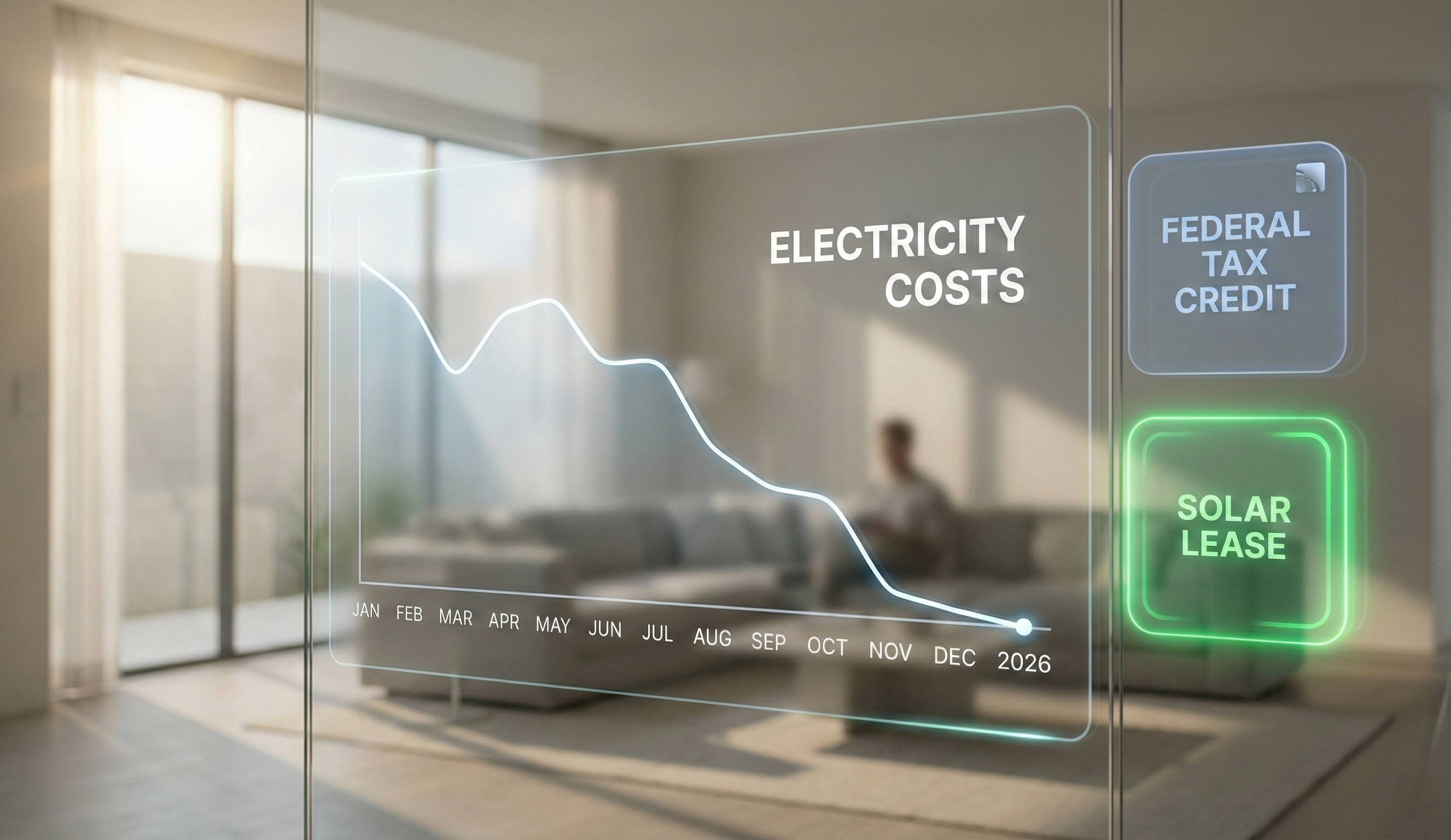
In 2026, the economic viability of the Invisible Home is determined by a complex interplay of high upfront hardware costs, significant regulatory incentives, and long-term utility savings.
The premium for transparency is substantial.
- Transparent Windows: Estimates for 2025-2026 place the cost of solar glass at $50 to $86 per square foot (installed), compared to roughly $15-$25 for standard high-performance commercial glass. However, manufacturers argue that the "marginal cost"—the difference between a high-end window and a solar window—is the relevant metric. UbiQD projects a premium of "not more than 30 percent" over ordinary windows as manufacturing scales.
- Solar Blinds: A typical SolarGaps setup can cost between $1,200 and $2,500 for a set of windows. This is significantly more expensive than standard blinds but comparable to high-end motorized Lutron or Hunter Douglas shades, which do not generate power.
The ROI picture in 2026 has improved due to rising electricity rates and the "double dividend" of energy generation plus thermal savings.
- Payback Period (Windows): For commercial buildings replacing curtain walls, the payback period is estimated at 5 to 9 years. This accounts for the electricity generated and the reduced HVAC load.
- Payback Period (Blinds): In high-insolation areas like Arizona or Southern Spain, SolarGaps claims a payback period of 2-3 years when factoring in the massive reduction in air conditioning usage. In cloudier climates like the UK, this period extends significantly, potentially pushing ROI to 10+ years without incentives.
Government incentives are the linchpin of the 2026 market.
- Eligibility of Windows: The IRS allows the credit for BIPV components (like solar windows) but typically applies it only to the incremental cost attributable to the solar function, or the full cost if the product is a "solar electric property" rather than a structural component. Manufacturers like UbiQD and Energy Glass Solar explicitly market their products as ITC-eligible.
- Eligibility of Blinds: Solar blinds generally qualify for the 30% credit as they are distinct solar generation devices. VELUX, for example, markets its solar-powered skylights and blinds as eligible for the full 30% credit on both product and installation. This effectively creates a 30% discount coupon from the federal government, significantly improving the ROI.
In Europe, the driver is less about tax credits and more about mandates and VAT relief.
- REPowerEU: The EU's push for energy sovereignty has led to mandates requiring solar on all new commercial and public buildings. This forces developers to look beyond the roof to the façade.
- VAT Reduction: The UK and several EU nations have reduced VAT on energy-saving materials (including solar panels) to 0%, directly lowering the purchase price for consumers.
- France's Parking & Roof Mandate: France's requirement for solar canopies on large parking lots has created a massive market for semi-transparent BIPV (like Polysolar's products), which is spilling over into architectural glass adoption.
Future Outlook: The Connected, Invisible Grid<p></p>
As we look beyond 2026, the trajectory of the "Invisible Home" points toward total integration.
By 2030, the "Invisible Home" will be a smart node in the decentralized grid. Solar curtains will communicate with the local utility, selling excess power back during peak demand (mid-day) or storing it in integrated batteries to smooth out the "duck curve" of energy demand. The home will no longer just consume energy; it will breathe it—inhaling sunlight through its windows and exhaling power to the grid.
The "Invisible Home" of 2026 represents the maturation of solar technology from a utility-scale industrial product to a consumer-grade architectural element. The "blue brick" is dead; in its place is a diverse ecosystem of transparent quantum dot windows, organic photovoltaic glazing, and smart solar drapery.
Driven by the necessity of urbanization, the force of regulatory mandates, and the ingenuity of materials science, BIPV has moved from the lab to the living room. For the renter in New York or the architect in London, the window is no longer just a view to the outside world—it is the engine that powers their life within it. While cost remains a barrier, the combination of 30% tax credits and energy savings is rapidly closing the gap, making the invisible choice the smartest one visible.
| Technology | Best Application | Key Players/Brands | 2026 Status | Cost Estimate (Installed) |
|---|---|---|---|---|
| Transparent Solar Glass (QD/OPV) | Skyscrapers, Luxury Residential, Facades | UbiQD (Wendow), Ubiquitous Energy, Next Energy | Early Commercial / Scaling | ~$50 - $86 / sq ft |
| Semi-Transparent BIPV | triums, Canopies, Skylights | Onyx Solar, Polysolar, ClearVue | Mature / Widely Available | ~$25 - $40 / sq ft |
| Smart Solar Blinds | Renters, Retrofits, Apartments | SolarGaps, Solar Curtain (Yalcin Enerji) | Available (Consumer Tech) | ~$1,200 - $2,500 / set |
| Solar Window Coatings | Mass Market Residential Windows | Andersen (w/ Ubiquitous) | Emerging / Partnership Phase | Premium over standard |
Keep reading
Random picks from across Velio.

As we move deeper into 2025, a profound inversion is reshaping the technological landscape. The frontier of AI innovation has migrated from distant, massive cloud servers to the in
Why 60Hz is obsolete in 2026. Discover how 144Hz displays reduce eye strain, boost productivity, and why gaming tech is now the essential office health standard.

By using inexpensive "smart stickers" (NFC Stickers, the tech inside your credit card), you can create a home that organizes itself.

Discover how the "AI Co-Parent" is revolutionizing pet care. From smart collars to health-tracking litter boxes, explore the $50B tech trend saving pet lives.

Meet ElliQ: The proactive AI companion fighting senior loneliness. Discover how social robotics and 'invisible' tech are redefining independence for the 100-year life.
As we close out 2025, the landscape of budget PC building has shifted dramatically. Two years ago, "budget" meant compromising on core counts or being stuck on dead-end platforms.

2025 marks the end of the "app" era. Explore how Ambient Computing, Large Action Models (LAMs), and neural interfaces are making screens obsolete.

Is TypeScript losing its crown? Explore the 2025 dev landscape, rising salaries, developer burnout, and Microsoft’s 10x faster Go-based "Project Corsa."

Stop monetizing hobbies. Discover why "strategic uselessness" and active recovery are the real cures for burnout. Hack your 5-to-9 routine for healing, not just hustling.