



At Velio, we have long tracked the integration of smart technology into our homes and personal lives. Yet, one of the most profound shifts we are currently witnessing isn't just about how we manage our thermostats or track our steps—it's about how we care for the non-human members of our families.
The cultural framework has shifted fundamentally. We have moved past the era of "pet ownership" and firmly into the age of "pet parenting." Today, animal companions are viewed as integral family members—often surrogate children—entitled to premium nutrition, healthcare, and emotional consideration. But this elevated status brings an elevated burden of worry. Unlike a human child, a pet cannot verbalize pain, nausea, or anxiety. They suffer in silence, leaving their human guardians constantly scanning for subtle changes in behavior.
This is where technology steps in, not merely as a gadget, but as a partner. Enter the "AI Co-Parent." This new category of technological infrastructure—spanning sophisticated wearables, AI-driven diagnostics, and sentient home habitats—is designed to share the cognitive and emotional load of caregiving. It promises to bridge the communication gap, using machine learning to translate physiological data into actionable health insights.
The market is responding aggressively to this need. Global projections suggest the pet technology market will surge from approximately $15.6 billion in 2025 to over $52.9 billion by 2035. This isn't just about automated feeders; it's about the medicalization of the home and the rise of the algorithmic guardian.
The Sociological Engine: Why We Need a Co-Parent
To understand the tech adoption, we must understand the user. The driving force behind this boom are Millennials and Gen Z. These cohorts are often delaying traditional milestones like homeownership or human children, instead forming "starter families" with pets at the center.
Data indicates that Millennials currently represent the largest segment of pet owners at 35%, accounting for 40% of total spending. Furthermore, this spending is remarkably resilient. Despite economic uncertainties, pet welfare remains a non-negotiable priority, with nearly 34% of Millennials and 29% of Gen Z willing to take on debt to cover pet-related expenses.
For these generations, the "AI Co-Parent" addresses a specific psychological pain point: the anxiety of the unknown. Market narratives have shifted from convenience (feeding the cat while at work) to collaboration (monitoring kidney function together). The technology offers "peace of mind," promising to alert the parent to health risks like fever or seizures before they become critical.
The Quantified Pet: Giving Health a Voice
The most visible aspect of the AI Co-Parent ecosystem is the evolution of wearables. We have moved far beyond simple GPS tracking for lost dogs. Today's smart collars are essentially localized medical labs, continuously sampling the animal's physiology to detect anomalies that would escape human observation.
The market has segmented into distinct tiers based on data fidelity and intended use:
Table 1: The Hierarchy of Wearable Intelligence
| Tier | Primary Focus | Key Metrics & Tech | Target Audience |
|---|---|---|---|
| Tier 1: Lifestyle & GPS | Location security and basic activity tracking. | GPS, LTE-M, steps, active minutes, sleep duration. | Active dogs, escape risks, general wellness tracking. |
| Tier 2: Health Signaling | Behavioral analysis and preventative care. | High-frequency accelerometers and ML classifiers to detect scratching, licking, and drinking habits. | Allergy-prone pets, weight management, early detection of metabolic issues. |
| Tier 3: Clinical Monitoring | Medical-grade diagnostics for chronic conditions. | Acoustic sensors, thermistors, and 6-D accelerometers measuring HRV, temperature, respiration, and pain scores. | Senior pets, post-surgical cases, dogs with epilepsy or cardiac conditions. |
Source: Velio analysis of current market offerings.
At the clinical tier, companies like PetPace are pioneering the quantification of pain. By analyzing subtle changes in Heart Rate Variability (HRV) and posture, AI can detect pain signaling before visible symptoms appear, providing owners with a daily "Pain Index." Similarly, devices using miniaturized radar can now generate geometrical representations of a dog’s heartbeat to detect Atrial Fibrillation with over 92% accuracy, bringing specialist cardiology monitoring into the living room.
Meanwhile, platforms like Whistle focus on behavioral signatures. By sampling motion at high frequencies, their algorithms can distinguish between a walk, a shake, and a scratch. A sudden spike in scratching duration can trigger an alert for dermatological issues, while changes in drinking habits can provide an early warning system for diabetes or kidney failure.
Ambient Intelligence: The Sentient Habitat
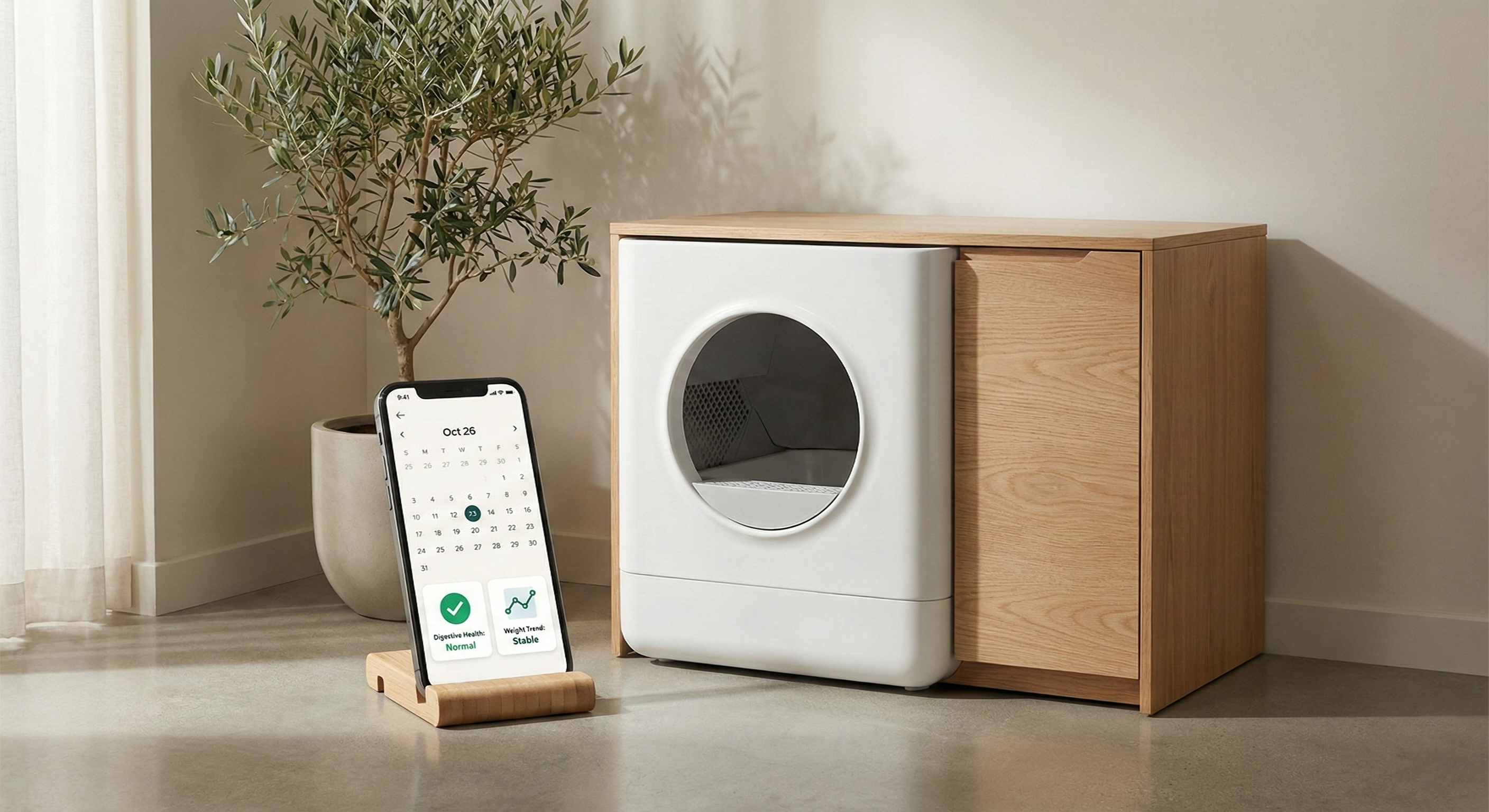
The AI Co-Parent extends beyond wearables into the environment itself. We are seeing the rise of "Ambient Intelligence," where household infrastructure participates in care.
For cat parents, the litter box is becoming a diagnostic hub. Felines are notorious for masking illness, making urinary tract conditions and kidney disease difficult to spot early. New "smart" litter boxes utilize computer vision and AI to analyze stool quality and toileting posture, detecting straining behavior or blood. Others use load cells to track weight fluctuations and urine volume, providing crucial data points for multi-cat households where knowing "who did what" is historically impossible.
Even the often-overlooked reptile market is experiencing an automation revolution. Advanced habitats now use AI to move beyond simple thermostats, creating adaptive climate profiles that replicate species-specific circadian rhythms, ensuring the precise environmental stability these animals require to survive.
Clinical Integration and the Privacy Paradox
The ultimate goal of this data isn't just to inform the owner, but to assist the veterinarian. Historically, vets rely on owner observation, which is often subjective and incomplete. The AI Co-Parent provides objective, longitudinal data—a baseline of "normal" for that specific animal. This is proving revolutionary for managing chronic conditions like epilepsy, where accurate logs of seizure activity are vital for medication dosage.
However, at Velio, we must also acknowledge the friction points. The introduction of cameras, microphones, and location trackers into the intimate spaces of the home creates significant privacy risks. Research has exposed security flaws in some pet tech apps, including unconsented tracking and vulnerability to data interception.
There is also the psychological cost of the "Quantified Pet." The constant stream of data can generate anxiety, leading owners to obsess over minor, clinically insignificant deviations in biometrics—a phenomenon akin to "orthosomnia" in humans. Furthermore, we must be vigilant about the potential for these domestic IoT devices to be weaponized in domestic abuse scenarios, where trackers and cameras intended for pet safety are misused for human surveillance.
Conclusion
The shift toward the AI Co-Parent is transformative. By 2026, the engaged pet parent is no longer a solitary observer but is supported by a digital infrastructure that listens, watches, and analyzes on their behalf.
This technology offers immense benefits: earlier disease detection, optimized nutrition, and profound peace of mind. But as this market swells toward a $50 billion valuation, the most successful technologies will be those that manage to recede into the background. The goal of the AI Co-Parent should be to support the human-animal bond without mediating it—ensuring that while the care may be artificial, the connection remains authentically human.
Keep reading
Random picks from across Velio.

Stop monetizing hobbies. Discover why "strategic uselessness" and active recovery are the real cures for burnout. Hack your 5-to-9 routine for healing, not just hustling.

Discover how transparent solar windows and smart curtains are redefining urban energy in 2026. Explore the "Vertical Power Plant" and the latest BIPV trends from key players like UbiQD and SolarGaps.

Why 60Hz is obsolete in 2026. Discover how 144Hz displays reduce eye strain, boost productivity, and why gaming tech is now the essential office health standard.

2025 marks the end of the "app" era. Explore how Ambient Computing, Large Action Models (LAMs), and neural interfaces are making screens obsolete.

As we move deeper into 2025, a profound inversion is reshaping the technological landscape. The frontier of AI innovation has migrated from distant, massive cloud servers to the in

As we close out 2025, the landscape of budget PC building has shifted dramatically. Two years ago, "budget" meant compromising on core counts or being stuck on dead-end platforms.

Is TypeScript losing its crown? Explore the 2025 dev landscape, rising salaries, developer burnout, and Microsoft’s 10x faster Go-based "Project Corsa."
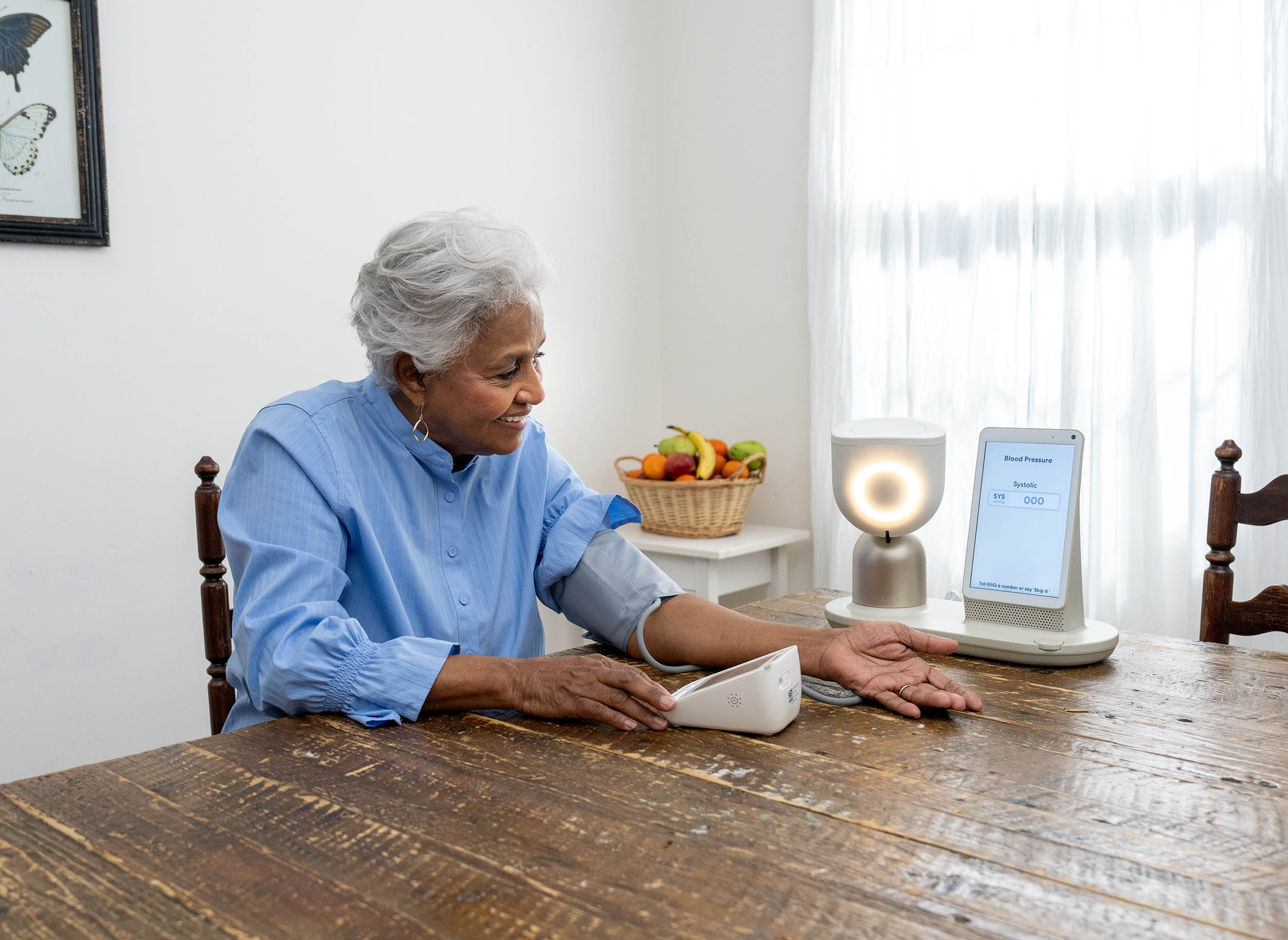
Meet ElliQ: The proactive AI companion fighting senior loneliness. Discover how social robotics and 'invisible' tech are redefining independence for the 100-year life.

By using inexpensive "smart stickers" (NFC Stickers, the tech inside your credit card), you can create a home that organizes itself.